
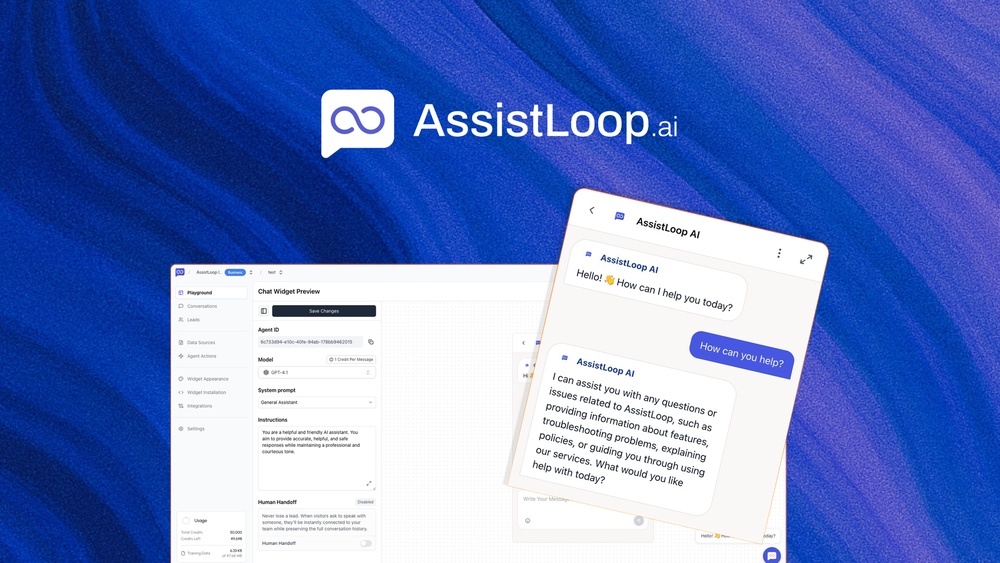
Assistloop Vs Intercom Fin Ai Comparison: Which Is Best for 2026?
Choosing the right AI tool for customer support can make or break your business’s user experience. With the rise of AI-powered solutions, it’s easy to get lost in the buzzwords and promises. But when you put Assistloop and Intercom Fin AI side by side, what really matters for your team and your customers? This article dives deep into how these two advanced tools compare, looking at their strengths, weaknesses, and the unique ways they can transform your support operations. If you’re looking to future-proof your support and boost efficiency, understanding these differences is essential.
What Are Assistloop And Intercom Fin Ai?
At their core, both Assistloop and Intercom Fin AI are designed to automate and enhance customer conversations using artificial intelligence. But their focus, technology, and impact can be quite different.
Assistloop is a relatively new player known for its strong emphasis on human-AI collaboration. It’s designed for companies that want to scale support without losing the personal touch. By blending AI with real-time human input, Assistloop aims to give teams more control, transparency, and accuracy in every customer interaction.
Intercom Fin AI is an AI solution from Intercom, a well-established leader in customer communication platforms. Fin AI is built to automate responses, resolve common issues, and seamlessly escalate to human agents when needed. Intercom’s reputation for smooth user experiences and integration with its broader platform makes Fin a popular choice for scaling support operations quickly.
While both tools offer AI-driven answers, their approach to automation, customization, and team collaboration is where the comparison gets interesting.
Core Features Compared
Every AI support tool promises fast, accurate answers. But what’s under the hood can make a big difference for daily operations.
Ai Engine And Automation Capabilities
Assistloop uses a hybrid AI model. Its system blends large language models (like GPT-4) with company-specific data and real-time agent oversight. The AI suggests responses, but humans can review, edit, or approve them before they reach the customer. This “human in the loop” approach is central to how Assistloop operates.
Intercom Fin AI, on the other hand, is built for end-to-end automation. It leverages machine learning to detect intent, pull from help articles, and respond directly to customers. Human agents step in only when the AI can’t confidently resolve the issue.
Integration With Existing Tools
Both platforms offer integrations, but their depth and flexibility differ.
- Assistloop integrates with popular help desks (like Zendesk and Freshdesk), Slack, and email. Its API allows for custom setups, but the range of plug-and-play integrations is still growing.
- Intercom Fin AI benefits from Intercom’s massive ecosystem. It connects natively with Intercom’s messenger, help center, CRM, and hundreds of third-party apps. Integration is seamless if you’re already using Intercom.
Customization And Control
Assistloop shines in fine-tuning AI behavior. Teams can set rules, review suggested answers, and train the AI with company-specific FAQs and style guides. If your brand voice or compliance needs are strict, this control is invaluable.
Intercom Fin AI focuses on speed and scale. Customization is handled mainly by linking help articles, adjusting conversation flows, and setting escalation triggers. It’s easier for teams who want to “set it and forget it,” but may feel limiting for those needing more granular control.
Analytics And Reporting
Both platforms offer analytics, but the scope varies.
- Assistloop provides insights on AI vs. human resolutions, response quality, time saved, and agent-AI collaboration metrics.
- Intercom Fin AI tracks resolution rates, customer satisfaction scores, and escalation patterns within the broader Intercom reporting suite.
Knowledge Management
Assistloop allows direct editing and training of AI answers, making it simple to update information as products or policies change. Intercom Fin AI relies heavily on the quality of your Intercom help center content. Well-written articles lead to better AI answers.
Here’s a quick side-by-side look at these feature areas:
| Feature | Assistloop | Intercom Fin AI |
|---|---|---|
| AI Model | Hybrid (AI + human review) | Fully automated |
| Integration Depth | Good (growing list) | Excellent (large ecosystem) |
| Customization | High (rules, style, training) | Moderate (help articles, flows) |
| Knowledge Management | Direct editing/training | Help center content driven |
| Analytics | Detailed, focuses on AI-human mix | Strong, integrated with Intercom |
User Experience And Interface
How your team and customers interact with these tools shapes adoption and satisfaction.
For Agents
Assistloop’s interface is built around collaboration. Agents see AI-suggested replies and can approve, reject, or edit them. This gives newer agents a confidence boost and helps managers ensure quality. Some teams worry about the extra step, but most find it leads to fewer mistakes and better learning.
Intercom Fin AI is more “hands-off. ” Agents mainly see conversations escalated by the AI. For high-volume teams, this can feel like a relief—AI handles the basics, and humans tackle the rest. But in rare cases, agents may feel disconnected from the initial customer experience.
For Customers
Both tools aim to give fast, relevant answers. Intercom’s messenger is highly polished, with features like chatbots, carousels, and easy file uploads. Assistloop’s customer interface depends on the connected platform (like Zendesk or Slack), so the experience can vary.
A non-obvious insight: Customer trust is shaped as much by the accuracy of answers as by the tone and clarity. Assistloop’s human review layer often delivers more on-brand answers, while Intercom’s automation can sometimes miss subtle context.
Setup And Onboarding
Getting started with a new AI support tool can feel daunting. Here’s how the process compares.
Assistloop’s setup involves connecting your help desk, uploading knowledge base articles or FAQs, and configuring the “human in the loop” workflow. Training sessions for agents help them understand when to trust the AI and when to intervene.
Intercom Fin AI is fastest for teams already using Intercom. You enable Fin, review your help articles, and set escalation rules. There’s less training for agents because the AI handles most first-line conversations.
A practical tip: The quality of your knowledge base is the biggest factor in early AI success. Poor or outdated articles lead to confusing answers, no matter which system you choose.
Pricing And Value
AI support pricing can be complex, depending on features, users, and support volume.
- Assistloop typically charges per seat (agent), with extra costs for advanced features like analytics or API access. There may be usage-based fees for high AI volumes.
- Intercom Fin AI is priced as an add-on to Intercom’s main platform. Costs scale with the number of conversations and AI-assisted resolutions. For companies already invested in Intercom, this can be cost-effective.
Here’s a simplified cost comparison to illustrate relative pricing:
| Company Size | Assistloop (per month) | Intercom Fin AI (per month) |
|---|---|---|
| Small (5 agents) | $300–$500 | $250–$600* |
| Mid (20 agents) | $1200–$1800 | $1000–$2200* |
| Enterprise (50+ agents) | Custom pricing | Custom pricing |
*Intercom Fin AI pricing varies based on base Intercom subscription and usage.
A common mistake: Underestimating the total cost of ownership. With both tools, factor in agent training, knowledge base updates, and ongoing optimization—not just the monthly fee.
Security, Privacy, And Compliance
Handling customer data with care is non-negotiable. Here’s where both platforms stand.
Assistloop follows industry-standard security protocols, with data encryption, access controls, and GDPR compliance tools. Because human agents review AI output, there is an extra layer of oversight for sensitive information.
Intercom Fin AI benefits from Intercom’s robust compliance certifications, including SOC 2, GDPR, and ISO 27001. AI conversations and data are managed within the same secure environment as the rest of your Intercom data.
One insight many miss: The risk of sensitive data exposure increases with full automation. If your industry requires manual review of certain requests (like finance or healthcare), Assistloop’s hybrid model may offer stronger safeguards.
Real-world Performance
Statistics and case studies help reveal what numbers alone can’t.
- Assistloop users report up to a 40% reduction in average handle time for common queries, with a 20–30% improvement in first-contact resolution. Teams say that new agents ramp up faster by learning from AI suggestions.
- Intercom Fin AI users see up to 50% of inbound conversations resolved with no human touch, especially for high-frequency questions. CSAT scores often remain stable or improve, as customers get faster replies.
A practical example: A SaaS company using Assistloop cut onboarding time for new agents from two weeks to five days, thanks to AI-guided answers and manager oversight. Meanwhile, an e-commerce retailer using Intercom Fin AI automated over 60% of order tracking requests, freeing agents for more complex issues.
When To Choose Assistloop
Assistloop isn’t for everyone, but it’s a powerful fit for certain teams.
Choose Assistloop if:
- You have strict compliance or brand voice needs. Human review ensures every answer meets standards.
- Your support content is complex or changes often. Direct AI training and editing make updates easy.
- You want to upskill agents. The system helps agents learn by example and makes collaboration the norm.
A less obvious benefit: Assistloop helps you catch and correct AI errors before customers see them. This reduces embarrassing mistakes and builds trust over time.

Credit: www.reddit.com
When To Choose Intercom Fin Ai
Intercom Fin AI is best for teams aiming for scale and speed.
Choose Intercom Fin AI if:
- You already use Intercom. Integration is seamless, and your data stays in one ecosystem.
- You have a large volume of simple, repetitive queries. The AI can handle these at scale, cutting agent workload.
- You need to launch automation fast. Fin AI is quick to set up if your help center articles are solid.
A common mistake: Thinking more automation is always better. For complex or sensitive cases, human touch still matters.
Advanced Features And Innovations
Both platforms are investing in the future of AI support. Here’s what’s emerging.
Assistloop Innovations
- Contextual Memory: Remembers past interactions for more personalized answers.
- AI Quality Score: Rates every AI suggestion for managers to review.
- Multilingual Support: Expanding to support global teams with real-time translation.
Intercom Fin Ai Innovations
- Proactive AI: Reaches out to customers with relevant tips before they ask.
- Integration with Product Data: Pulls real-time info from your systems (like order status or account details).
- Conversational Analytics: Breaks down which topics the AI handles well and where humans need to step in.
One non-obvious insight: Assistloop’s focus on agent learning is rare in the AI support space. Most tools aim to replace humans, but Assistloop aims to empower them.
Limitations And Potential Drawbacks
No tool is perfect. Here’s what to watch out for.
Assistloop Limitations
- Slower full automation: The human review step can add a few seconds per reply.
- Integration gaps: If you need deep integration with niche tools, you may need custom development.
- Learning curve: Agents must learn when to trust AI and when to intervene.
Intercom Fin Ai Limitations
- Less control: Customizing AI behavior beyond help article mapping can be tricky.
- Risk of off-brand replies: Fully automated answers may miss your unique tone.
- Cost at scale: For very large teams, per-conversation pricing can add up.
A tip: Test with a pilot group before full rollout. This helps you catch surprises and tailor the setup to your workflows.
User Reviews And Community Feedback
What Do Real Users Say After Months With These Tools?
- Assistloop wins praise for agent empowerment and quality control. Managers like being able to spot and fix AI mistakes early. Some wish for more plug-and-play integrations.
- Intercom Fin AI is loved for its “set and forget” simplicity. Teams appreciate the time saved on routine tickets. The main complaint is around less flexible customization and occasional off-topic answers if the help center isn’t well maintained.
A useful resource for user reviews and case studies is the G2 Customer Self-Service platform.
Which Is Right For Your Business?
The best choice depends on your size, industry, and support goals.
- If you’re a fast-growing SaaS or fintech company with strict quality needs, Assistloop’s human-in-the-loop approach is likely a better fit.
- If you’re an e-commerce or marketplace with huge volumes of repetitive questions, Intercom Fin AI offers speed and simplicity.
- If you already use Intercom for messaging, Fin AI is almost always the smoothest path.
But here’s the twist: Some teams find a hybrid approach works best. They use Intercom Fin AI for first-line automation and Assistloop for higher-level, sensitive issues needing human touch.
Implementation Tips For Success
Switching to AI-powered support is about more than just the tool. Here’s how to maximize value:
- Audit your help content first. Both tools rely on clear, up-to-date answers.
- Start with a pilot group. Roll out to one team or product line, measure results, then expand.
- Train your agents. Show them how to use AI suggestions, when to edit, and when to escalate.
- Monitor analytics weekly. Don’t “set and forget”—optimize based on what’s working.
- Encourage feedback. Both customers and agents will spot issues the AI misses.
A practical example: One tech startup ran Assistloop and Intercom Fin AI side-by-side for a month. They found Assistloop cut errors on complex tickets, while Fin AI handled 70% of password reset requests. Combining both let them scale efficiently without losing quality.

Credit: paperform.co
Future Trends In Ai Customer Support
AI support is evolving fast. Here’s what to watch:
- Better personalization: Both tools will soon use more customer data to tailor answers.
- Voice and video AI: Beyond text, expect support via voice assistants and even video.
- No-code customization: More drag-and-drop tools for non-technical admins to shape AI behavior.
- Stronger privacy tools: As regulations tighten, expect more granular control over data access and retention.
A non-obvious trend: Agent-AI collaboration will become a competitive advantage. Teams that blend human judgment with AI speed will deliver the best customer experiences.
Frequently Asked Questions
How Does Assistloop’s “human In The Loop” Model Work In Practice?
Assistloop’s AI suggests replies, but a human agent must review, edit, or approve the answer before it’s sent to the customer. This setup catches mistakes, ensures brand consistency, and helps agents learn from AI suggestions. It adds a few seconds per reply but greatly reduces errors.
Can Intercom Fin Ai Handle Multiple Languages?
Yes, Intercom Fin AI supports multiple languages, but accuracy depends on the quality of your translated help articles. For best results, keep your content up to date and in clear, simple language.
Which Tool Is Better For A Small Startup?
For small teams, Intercom Fin AI is often easier to launch—especially if you’re already using Intercom for messaging. However, if your product is complex or compliance-heavy, Assistloop’s human review can help avoid risky mistakes.
What Happens If The Ai Gives A Wrong Answer?
With Assistloop, the agent can catch and correct the answer before the customer sees it. With Intercom Fin AI, you need to monitor analytics for common mistakes and improve your help content or escalation rules to reduce errors.
How Do I Measure Success With These Ai Tools?
Track key metrics like:
- Resolution rate (what % of tickets are handled by AI)
- Customer satisfaction (CSAT or NPS scores)
- Average handle time
- Agent satisfaction and productivity
Set goals before launching, and review analytics weekly to tune your setup.
As AI redefines customer support, the right choice comes down to your team’s needs, your appetite for automation, and the quality of your content. Both Assistloop and Intercom Fin AI can transform your support operation—choose wisely, and you’ll deliver faster, smarter, and more reliable service in the years ahead.
Credit: paperform.co


About author








Add comment