
How to Analyze Sales Call Transcriptions Using Gong AI Effectively
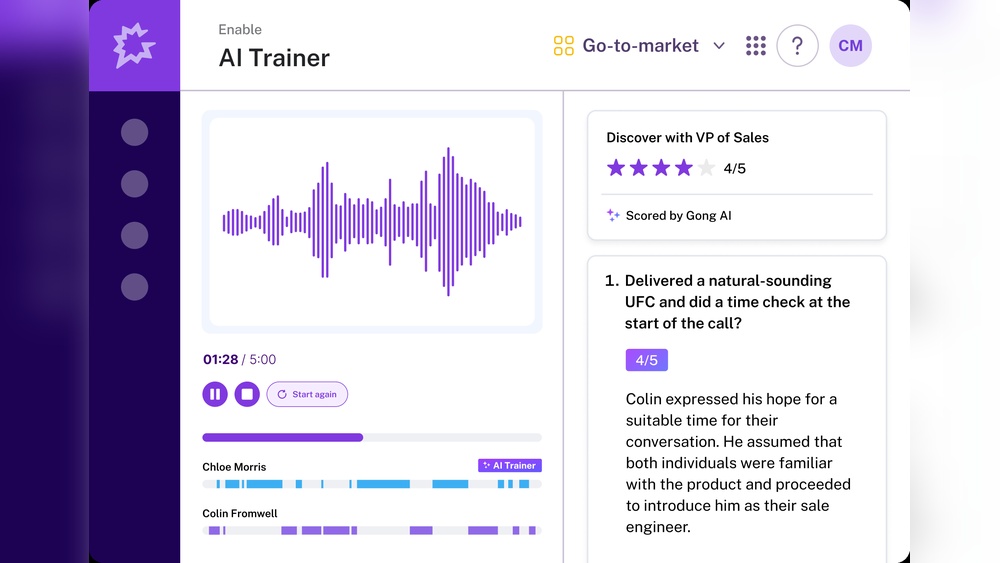
Sales calls are one of the most direct windows into your customer’s mind. Every objection, every “yes,” and every moment of hesitation tells a story. But listening to dozens or hundreds of calls is nearly impossible for any manager. That’s where tools like Gong AI come in. Gong transforms spoken sales conversations into written transcriptions and then uses artificial intelligence to analyze what’s really happening. It can help you spot patterns, coach your team, and make smarter decisions—all from data buried inside everyday calls.
But getting real value out of Gong AI isn’t just about running reports. You need to know how to analyze sales call transcriptions in a way that goes beyond the basics. This guide will show you how to unlock the true power of Gong, from the moment your call is transcribed to advanced tips for coaching, forecasting, and improving your sales process. Even if you’re new to AI or not a tech expert, you’ll learn the steps, tools, and insights that set top-performing sales teams apart.
Why Analyze Sales Call Transcriptions?
Sales calls are packed with information, but much of it gets lost without proper analysis. By reviewing transcriptions, you can:
- Discover what top reps do differently
- See why deals are won or lost
- Uncover common objections and questions
- Identify training gaps in your team
- Improve your sales process with real customer language
AI-powered tools like Gong make it possible to do this at scale, not just for one or two calls, but for every conversation across your team.
The Limits Of Manual Review
Trying to manually listen to and analyze calls is time-consuming. You may miss subtle trends or only catch big mistakes. AI tools process hundreds of hours of audio quickly and find patterns you might never notice on your own.
Turning Conversations Into Actionable Data
When you analyze transcriptions, you’re not just reading what was said—you’re turning conversations into data. This data reveals:
- Which topics lead to closed deals
- How much talk time your reps use versus clients
- Which competitors are mentioned most often
This kind of insight helps you coach better, forecast more accurately, and ultimately close more deals.
Getting Started With Gong Ai
Before you can analyze sales call transcriptions, you need to set up Gong AI for your team.
Setting Up Gong
- Integration: Connect Gong with your call platforms (e.g., Zoom, Microsoft Teams, RingCentral). Gong automatically records and transcribes calls.
- User Permissions: Assign roles (admin, manager, rep) to control who can access and analyze data.
- Call Library: Gong creates a searchable library of all transcribed calls.
Understanding Gong’s Ai Features
Gong’s AI doesn’t just transcribe. It can:
- Identify speakers
- Separate topics
- Flag keywords (like “budget” or “timeline”)
- Analyze sentiment (positive, negative, neutral)
- Track talk-to-listen ratios
These features are the building blocks for deeper analysis.
Privacy And Compliance
Gong follows strict privacy rules. Calls are encrypted, and access is controlled by permissions. Make sure you check local recording laws and inform participants if required.
How Gong Ai Transcribes And Analyzes Calls
Gong’s transcription engine is powered by advanced speech-to-text technology. Here’s how it works step by step.
The Transcription Process
- Recording: Gong records the audio from your sales call.
- Speaker Separation: The AI separates the voices of the rep and the customer.
- Speech-to-Text: Audio is converted to text, with timestamps for every line.
- Data Tagging: Keywords, topics, and questions are flagged automatically.
How Accurate Are Gong Transcriptions?
Gong’s AI is trained on millions of calls and is highly accurate, especially for English conversations. It handles industry-specific terms well, but background noise or heavy accents can sometimes reduce accuracy. Always review transcriptions for critical calls.
Example: A Real Transcription Segment
> Rep: “what’s Your Budget For This Project?”
>
> Customer: “we’re Looking To Stay Under Fifty Thousand.”
>
> [Gong flags the word “budget” and tags this as a pricing discussion. ]
This makes it easy to search all calls for budget conversations without listening to the audio.
Key Metrics And Insights From Gong Ai
Gong’s power comes from turning words into metrics. Here are some of the most valuable data points you’ll find.
1. Talk-to-listen Ratio
This shows how much your rep talks versus the customer. A good ratio is often around 40:60 (rep:customer). Too much talking by your rep may signal poor discovery or lack of engagement.
2. Longest Customer Monologue
How long does the customer speak without interruption? Longer monologues often mean the rep is asking open questions and letting the buyer share their needs.
3. Questions Asked
Gong counts how many questions your rep asks. More questions usually mean better discovery and qualification.
4. Next Steps Set
Gong tracks if a “next step” was discussed or scheduled. This is key for pipeline health.
5. Topics Discussed
Gong tags and scores topics like budget, timeline, competitors, and decision makers. You can see which topics are linked to closed deals.
6. Sentiment Analysis
Gong’s AI detects positive, negative, or neutral language. A shift to negative sentiment can be a warning sign.
7. Objection Handling
The AI flags objections (e. g. , “It’s too expensive”) and how your reps respond.
8. Competitor Mentions
Every time a competitor is named, Gong tracks it. You can see which competitors come up most often.
9. Filler Words And Clarity
Gong highlights overuse of filler words (“um,” “uh,” “like”). This helps identify where clarity can improve.
10. Call Duration And Stage
Longer calls are not always better. Gong matches call length with deal stage, helping you spot if reps are spending too long on early-stage prospects.
Table: Key Gong Metrics At A Glance
| Metric | What It Measures | Why It Matters |
|---|---|---|
| Talk-to-Listen Ratio | Rep talk vs. customer talk | Shows engagement and listening skills |
| Questions Asked | Total questions by rep | Indicates discovery and qualification |
| Sentiment Analysis | Emotional tone of call | Predicts deal health and risk |
| Next Steps Set | Follow-up actions discussed | Essential for moving deals forward |
| Objection Handling | Objections raised and addressed | Shows rep’s ability to resolve concerns |
How To Analyze Transcriptions For Coaching
One of the most powerful uses of Gong is sales coaching. Instead of just telling reps to “do better,” you can show them exactly where to improve.
Review Calls With Data In Mind
Don’t listen to the whole call. Instead, use Gong’s filters:
- Search calls with “no next steps”
- Look for calls with low customer talk time
- Find calls with negative sentiment shifts
This pinpoints where coaching is needed.
Example: Coaching Based On Talk Ratio
If a rep’s talk ratio is 70:30, they’re talking too much. Pull up those segments, review the questions asked, and help them practice open-ended questions.
Scorecards And Feedback
Gong allows you to create scorecards—custom checklists for what a good call should include. Use these to give clear, specific feedback.
Sharing Best Practices
When a rep handles an objection perfectly, share that call snippet with the team. Gong makes it easy to clip and share highlights.
Common Coaching Mistakes
- Focusing only on bad calls: Good calls are just as valuable for learning.
- Ignoring context: A low talk ratio might be fine for a demo but not for a discovery call.
- Over-relying on AI: Human review adds nuance the AI may miss.
Table: Typical Coaching Scenarios Using Gong
| Scenario | What to Look For | Coaching Tip |
|---|---|---|
| Low Customer Engagement | Short answers, low customer talk time | Encourage open-ended questions |
| Objection Mishandling | Objection not addressed or ignored | Role-play objection handling |
| No Next Steps | Call ends without clear action | Coach on closing for commitment |
| Negative Sentiment | Shift to negative language mid-call | Analyze why and how to recover |
| Competitor Mention | Frequent competitor references | Train on competitive positioning |
Analyzing Trends Across Multiple Calls
Gong’s real strength is in spotting trends, not just reviewing single calls.
Aggregating Data
Gong aggregates data across hundreds of calls. You can see:
- Which objections are most common this quarter
- Which reps set next steps most often
- Which competitors are being mentioned more than last month
Example: Objection Trends
If “price is too high” comes up in 40% of lost deals, it’s time to review your pricing strategy or train reps on value selling.
Comparing Top Vs. Average Performers
Look at the habits of your top closers versus average reps. Do they ask more questions? Set more next steps? Use this data to build a coaching plan.
Visualizing Data
Gong presents data in dashboards and charts. For example, you can see a graph of deal win rates by talk ratio or objection handling skills.
Non-obvious Insight
Trend analysis can reveal hidden risks. For example, a sudden spike in competitor mentions may mean a new rival is taking market share.
Table: Team Performance Comparison
| Metric | Top Rep Avg. | Team Avg. | Difference |
|---|---|---|---|
| Customer Talk Ratio | 62% | 48% | +14% |
| Questions Asked | 14 | 8 | +6 |
| Next Steps Set | 93% | 75% | +18% |
| Objection Handling Score | 4.8/5 | 3.9/5 | +0.9 |
Using Gong Ai For Deal Forecasting
Sales leaders want to know: Which deals are real, and which are at risk? Gong’s AI can help.
How Gong Forecasts Deal Health
Gong analyzes all calls related to a deal and looks for signals:
- Was the decision maker involved in calls?
- Were next steps set?
- Did the prospect raise major objections?
- Was there a positive or negative shift in sentiment?
Gong then scores deal health and flags risks.
Example: At-risk Deal
If a deal has no calls with the decision maker and next steps haven’t been set after three meetings, Gong will flag it as a risk, even if the pipeline shows it as “likely. ”
Forecasting Accuracy
Teams that use Gong for forecasting often see more accurate predictions, because they’re based on real conversations—not just rep “gut feel. ”
Non-obvious Insight
Gong can show when deals are “ghosting” (no recent contact), helping you re-engage before it’s too late.
Credit: www.notta.ai
Improving Your Sales Process With Gong
Analyzing call transcriptions isn’t just about coaching reps. It can improve your entire sales process.
Identify Bottlenecks
If most deals stall at the proposal stage, review calls at that stage. Do buyers get confused? Are objections not handled?
Refine Messaging
Gong lets you see which words and phrases resonate with buyers. You might find that certain value propositions close more deals.
Update Playbooks
Use real call data to update your sales playbooks. Replace old scripts with language that works in today’s market.
Cross-department Insights
Share Gong insights with marketing (to improve messaging), product (to fix common complaints), and customer success (to improve onboarding).
Common Mistakes When Analyzing Gong Transcriptions
Even with a powerful tool, teams can make mistakes. Avoid these common pitfalls:
- Looking Only at Individual Calls: Focus on trends, not just one-off events.
- Ignoring Context: A “bad” metric in one situation may be fine in another.
- Over-Relying on AI: Always add human judgment to AI insights.
- Not Updating Scorecards: Review your coaching criteria regularly.
- Failing to Share Learnings: Insights should be shared across the team, not kept with managers.
- Neglecting Privacy: Always follow your company’s data policies and local laws.

Credit: www.youtube.com
Advanced Gong Ai Features For Power Users
Gong isn’t just for basic review. Power users can unlock deeper features.
Custom Keyword Alerts
Set Gong to alert you when certain words or phrases are used (e. g. , “legal,” “security,” “renewal”). This helps you act fast on important topics.
Integration With Crm
Connect Gong to your CRM to sync call data with opportunities, contacts, and notes. This creates a full picture of deal health.
Smart Trackers
Create trackers for specific competitor names, new products, or objections. Gong will automatically group and report on these topics.
Automatic Call Summaries
Gong’s AI can create short call summaries, saving managers hours each week.
Multi-language Support
Gong supports several languages, though accuracy is highest in English. Use with caution for non-English calls.
Non-obvious Insight
You can use Gong’s API to pull data into your own dashboards or BI tools for even more custom analysis.
Real-world Example: How A Saas Company Improved Close Rates
A mid-size SaaS company used Gong to analyze 1,000+ sales calls over six months. They found that:
- Top reps used the word “outcome” twice as often as others
- Calls with at least three questions about pain points closed 32% more deals
- Objection handling improved after call review sessions
By updating their playbook and coaching on these findings, close rates increased by 18% in one quarter.
Data Privacy And Compliance Considerations
Sales call data is sensitive. When using Gong:
- Inform all call participants if recording
- Limit access to sensitive calls (e.g., legal, financial)
- Regularly audit user permissions
- Delete old or irrelevant data as needed
Gong is SOC 2 and GDPR compliant, but always follow your own company’s privacy policies. For more details, see the Gong Security Center.
Integrating Gong Insights Into Daily Workflow
To get the most out of Gong AI, make it part of your daily routine.
- Review key metrics each morning
- Use Gong highlights in team meetings
- Set up alerts for urgent topics
- Share best-practice clips in chat or LMS systems
- Tie Gong insights to rep incentives and recognition
Future Trends: Ai And Sales Call Analysis
AI in sales is growing fast. In the near future, expect:
- Even more accurate transcriptions, even for noisy calls or strong accents
- Real-time coaching during calls, not just after
- Predictive analytics that suggest best next steps
- Deeper integration with other tools (e.g., contract management, billing)
- More advanced sentiment analysis that can pick up on subtle cues
Staying ahead of these trends means you’ll always get the best results from your sales data.
Frequently Asked Questions
What Is Gong Ai And How Does It Work?
Gong AI is an artificial intelligence platform that records, transcribes, and analyzes sales calls. It turns spoken conversations into searchable text, tags important moments (like objections or pricing discussions), and delivers insights through dashboards and reports. This helps sales teams improve performance, spot trends, and make better decisions.
How Accurate Are Gong Transcriptions?
Gong’s transcriptions are highly accurate for English-language business conversations, with accuracy rates above 90% under good audio conditions. Accuracy can drop if there is a lot of background noise, overlapping speech, or heavy accents. It’s always wise to double-check critical segments before sharing or making decisions.
Can Gong Analyze Calls In Languages Other Than English?
Yes, Gong supports several languages, including Spanish, French, and German. However, the highest accuracy and most advanced AI features are available in English. For non-English calls, always review the transcription quality and be aware some features (like sentiment analysis) may be less reliable.
How Can Gong Ai Help Improve Sales Team Performance?
Gong AI helps by identifying what top reps do differently, revealing common objections, tracking deal health, and highlighting areas for coaching. It also enables sharing of best-practice call clips, personalized feedback, and the ability to spot trends across hundreds of calls—making coaching and training much more effective.
Is Gong Ai Compliant With Privacy Laws?
Gong is SOC 2 and GDPR compliant, and offers strong encryption and access controls. However, every company should check local recording laws and ensure all participants are informed. User permissions can limit who accesses sensitive data. Always follow your organization’s privacy guidelines.
Sales call analysis is no longer just for big companies or tech experts. With tools like Gong AI, every team can unlock real value from their conversations. By learning how to analyze transcriptions, coach with data, and spot trends before your competitors do, you’ll close more deals and build a smarter, more agile sales team.
The future of selling is here—and it’s powered by conversation intelligence.

Credit: www.gong.io
About author






Add comment