
Amplemarket Buyer Intent Indicators Review: Boost Your Sales Fast
The way sales teams find and connect with potential buyers is changing fast. In today’s digital world, guessing who is interested in your product is no longer enough. You need to know who is actually ready to buy, what they care about, and when they’re searching for solutions. This is where buyer intent indicators come in. They help sales and marketing teams find the right people at the right time. One tool making waves in this area is Amplemarket. This platform promises to give you clear signals about which companies and people are likely to buy soon. But how effective is it really? What makes its intent data different from others? This review takes a deep look at Amplemarket’s buyer intent indicators—how they work, what you can expect, their strengths and weaknesses, and how they compare to other options.
What Are Buyer Intent Indicators?
Buyer intent indicators are signals or data points that show if a person or company is interested in buying a product or service. These indicators help businesses understand which prospects are more likely to buy soon. The idea is simple: if you can spot these signals, you can focus your efforts on people who are already thinking about what you offer.
Common buyer intent indicators include:
- Website visits to product or pricing pages
- Content downloads (like ebooks or whitepapers)
- Searches for specific keywords
- Engagement with marketing emails
- Social media activity about your solution or competitors
- Company news such as leadership changes or funding rounds
By tracking these signals, sales teams can reach out at the perfect time—when a lead is most interested and ready to talk.
How Amplemarket Uses Buyer Intent Data
Amplemarket is a sales automation and prospecting platform that puts buyer intent data at the center of its offering. The platform collects and analyzes many signals from the web to help users find leads who are showing signs of purchase intent.
Amplemarket uses a mix of internal data (like email engagement and response rates) and external data (such as web activity, company news, and job postings). Its algorithms scan the internet for signals that indicate a company is entering a buying cycle. For example, if a company is hiring for a new CTO, raising funds, or searching for software solutions, Amplemarket flags this as a possible sign of purchase intent.
The platform then ranks and scores these leads based on the strength of their signals, so you can prioritize your outreach.
Key Sources Of Amplemarket’s Buyer Intent Data
Amplemarket pulls intent signals from sources like:
- Public job postings: New roles may mean a company is growing or needs new tools.
- Press releases and funding news: Companies with new funding often invest in software or services.
- Website behavior: Visits to your site or specific product pages.
- Technology stack changes: When a company installs or removes certain tools, it can be a sign they are open to new solutions.
- Social media activity: Posts or engagement with topics related to your industry.
This mix of sources gives a well-rounded picture of who might be in the market to buy.
Main Features Of Amplemarket Buyer Intent Indicators
Amplemarket’s intent indicators are not just about collecting data—they are about making that data actionable. Here are some of the standout features:
1. Real-time Alerts
When Amplemarket detects a new intent signal, it sends a real-time alert to your dashboard or email. This means you won’t miss out on hot leads because you’re waiting for a weekly report. For example, if a target company just received Series B funding, you’ll know about it right away.
2. Lead Scoring Based On Intent
Every lead in Amplemarket gets a score that combines intent signals with other factors (like company size or fit). Higher scores mean a prospect is more likely to be in a buying cycle. This helps you focus on leads with the best chances of converting.
3. Customizable Intent Signals
You can choose which intent signals matter most for your business. For example, if you sell HR software, job postings for HR roles or mentions of HR tech on social media may be more important than funding news. Amplemarket lets you fine-tune the signals you want to prioritize.
4. Seamless Integration With Outreach
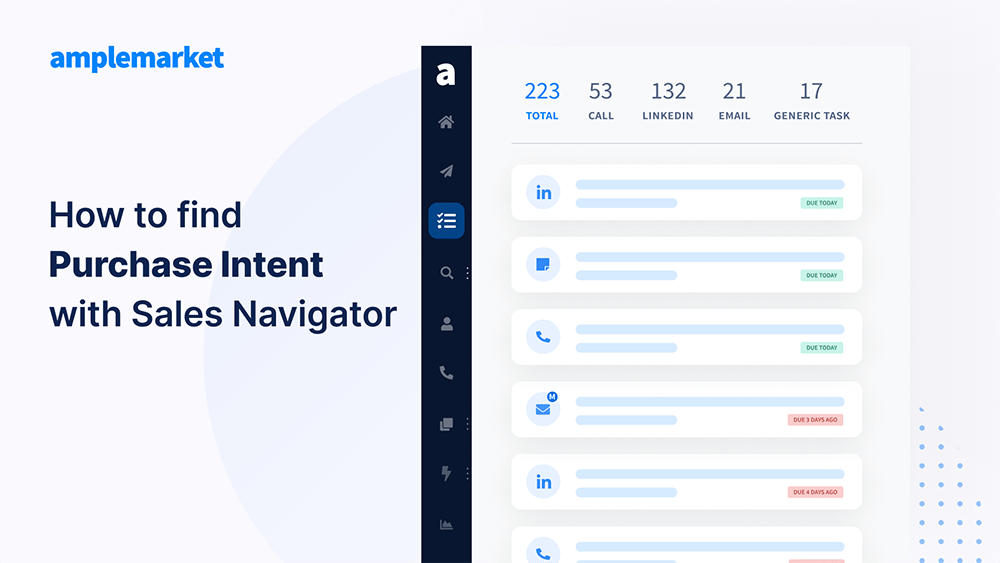
Amplemarket’s intent data connects directly to its outreach tools. When a new intent signal pops up, you can trigger automatic emails, calls, or LinkedIn messages to those leads. This saves time and ensures quick follow-up.
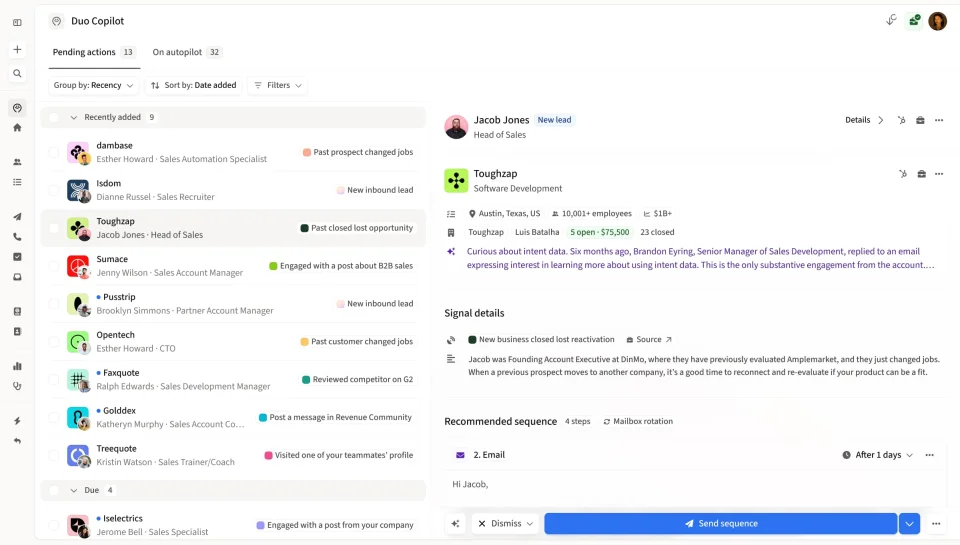
5. Detailed Lead Profiles
Each lead profile in Amplemarket includes:
- Company info
- Recent intent signals
- Contact details
- Engagement history
This makes it easy to personalize your outreach based on what’s happening with the lead.
6. Multi-layered Data Enrichment
Amplemarket enriches every lead with extra details, such as company size, industry, revenue, and technology stack. This helps you segment and filter leads based on what matters most to your business.
How Amplemarket Stands Out: Unique Advantages
There are many tools that offer buyer intent data, so what makes Amplemarket special? Here are some of its unique strengths:
Strong Signal Accuracy
Some platforms overwhelm users with too many weak signals, making it hard to know which leads are truly interested. Amplemarket’s algorithms are designed to reduce false positives by combining different sources of intent data. This helps you focus on high-quality leads instead of wasting time on “noise.”
Fast Response Capabilities
Amplemarket’s real-time alerts and direct integration with outreach tools mean you can act on new signals immediately. This speed matters—a study by InsideSales.com found that 50% of buyers choose the vendor that responds first.
Custom Signal Weighting
Not every business values the same signals. Amplemarket lets you adjust signal importance so your team can focus on what matters most to your market. This customization is rare among intent data platforms.
Full Automation
With Amplemarket, you can fully automate the process from intent detection to first outreach. If a lead shows a strong signal, the system can send an email, schedule a call, or assign the lead to a rep—no manual work needed.
Global Data Coverage
Many intent platforms focus only on the US or a few large markets. Amplemarket collects signals from around the world, making it a strong choice for companies selling internationally.
Real-world Examples: How Amplemarket Intent Indicators Drive Results
To understand the impact of Amplemarket’s buyer intent indicators, let’s look at how real teams use them.
Example 1: Saas Company Boosts Demo Bookings
A mid-sized SaaS company used Amplemarket to identify companies that had just raised funding and were hiring for IT roles. By reaching out within 48 hours of these events, the sales team saw a 40% increase in demo bookings compared to their old approach.
Example 2: Enterprise Sales Cuts Time To Close
An enterprise sales team focused on large accounts with recent leadership changes—another strong intent signal. By targeting new decision-makers right after they joined, the team reduced their sales cycle by 23%.
Example 3: Startups Win First Customers Faster
Startups using Amplemarket could spot early signals (such as competitors’ customers searching for alternatives or posting complaints online). Quick outreach to these prospects led to faster customer acquisition.
Two Non-obvious Insights
- Intent signals are not just about “who” but also about “when.” Even perfect-fit companies are unlikely to buy if you catch them at the wrong time. Amplemarket’s real-time signals help you reach leads when they’re actively looking.
- Negative intent signals can be just as useful. For example, if a company stops engaging or switches to a competitor, Amplemarket can help you spot these changes and adjust your strategy before it’s too late.
Comparison: Amplemarket Vs. Other Buyer Intent Tools
Choosing the right intent data platform can be confusing, especially with so many options. Here’s a side-by-side look at Amplemarket and two leading competitors: 6sense and ZoomInfo.
| Feature | Amplemarket | 6sense | ZoomInfo |
|---|---|---|---|
| Real-Time Alerts | Yes | Yes | Limited |
| Custom Signal Weighting | Yes | No | No |
| Global Coverage | Yes | Mostly US/Europe | Mostly US |
| Direct Outreach Automation | Yes | No | Partial |
| Data Enrichment | Yes | Yes | Yes |
| Pricing Transparency | Transparent | Custom Quotes | Custom Quotes |
| Integration with CRM | Yes | Yes | Yes |
This table shows that Amplemarket stands out for its customizability, real-time automation, and global reach. Competitors may have more integrations or broader data sets in certain regions, but Amplemarket’s approach is more flexible for many teams.
Credit: www.amplemarket.com
Setting Up Amplemarket Buyer Intent Indicators
Getting started with Amplemarket is straightforward, but there are steps to follow for the best results.
Step 1: Define Your Ideal Customer Profile
Before you start, clearly define who you want to reach. Think about:
- Industry
- Company size
- Location
- Role of decision-makers
This helps Amplemarket filter and score leads more accurately.
Step 2: Choose Your Intent Signals
Amplemarket lets you select which signals matter for your business. For example:
- For tech products: Technology changes, job postings for IT roles
- For HR services: HR leadership moves, company growth news
- For SaaS: Funding news, software review activity
Choosing the right signals makes your outreach more effective.
Step 3: Connect Your Outreach Channels
Integrate your email, CRM, and LinkedIn accounts with Amplemarket. This allows you to launch campaigns as soon as a new intent signal appears.
Step 4: Review And Act On Alerts
Watch your dashboard or set up notifications. When Amplemarket finds a new hot lead, act quickly. Personalize your outreach using the context provided in the lead profile.
Step 5: Measure Results And Adjust
After a few weeks, review your results. Are you booking more meetings? Are your leads more responsive? Adjust your intent signals and outreach strategy as needed.
Data Quality And Accuracy: What To Expect
One of the biggest concerns with buyer intent data is accuracy. If the signals are weak or wrong, you could waste time chasing the wrong leads. Here’s how Amplemarket addresses this challenge:
Machine Learning For Better Signals
Amplemarket uses machine learning to analyze thousands of signals and spot patterns that humans might miss. This means the system improves over time as it learns what works.
Cross-referencing Multiple Sources
Instead of relying on a single source, Amplemarket cross-checks signals from many places. For example, it won’t flag a lead as “high intent” just because they downloaded a whitepaper. It looks for supporting evidence, such as recent funding, job postings, or website activity.
Human Oversight
Amplemarket users can give feedback on signal quality. If you find a signal that’s not useful, you can flag it, and the system will learn to prioritize better signals in the future.
Data Update Frequency
Intent signals lose value if they’re outdated. Amplemarket updates its signals daily, so you’re working with fresh data. This is especially important in fast-moving markets.
Pricing Overview
Amplemarket offers transparent pricing—a rarity in the intent data world. Packages are based on the number of users and features needed. While exact prices can change, here’s a general range:
| Plan | Best For | Monthly Price (approx.) | Key Features |
|---|---|---|---|
| Starter | Small Teams | $250 | Basic intent data, outreach automation |
| Professional | Growing Sales Teams | $600 | Advanced signals, integrations, analytics |
| Enterprise | Large Organizations | Custom | Full automation, custom reporting, priority support |
Amplemarket’s pricing is competitive compared to similar tools, especially when you factor in both intent data and outreach automation.
Strengths And Weaknesses: A Balanced View
No tool is perfect. Here’s a look at where Amplemarket shines—and where it could improve.
Strengths
- High signal accuracy reduces wasted outreach
- Fast, real-time alerts give you a head start
- Customizable signals for different industries
- Global data coverage
- Integrated outreach tools for full automation
- Transparent pricing
Weaknesses
- Learning curve: Advanced features take time to master
- Limited integrations: Fewer plug-and-play options than some competitors
- Signal overload: Too many alerts can be distracting if not managed well
- Focus on outbound: Best for teams that do a lot of proactive outreach
Common Mistakes To Avoid When Using Amplemarket
Even the best tools can disappoint if used incorrectly. Here are mistakes to watch for:
- Chasing every signal: Not all signals are equally strong. Focus on high-quality, multi-source signals for the best results.
- Ignoring data hygiene: Outdated or duplicate leads can waste time. Regularly clean your database.
- Neglecting personalization: Even with great intent data, generic outreach won’t work. Use the context Amplemarket provides to make your messages relevant.
- Not reviewing performance: Check your results often. Adjust your signals and strategies based on what’s working.
- Over-automating: Automation saves time but don’t lose the human touch. Balance speed with thoughtful communication.
Amplemarket Buyer Intent Indicators: Best Use Cases
Amplemarket is not for every business. It works best for companies that:
- Sell high-ticket products or services (B2B SaaS, consulting, enterprise tech)
- Have dedicated sales teams
- Rely on outbound prospecting
- Need to reach international or niche markets
Companies with long sales cycles or complex buying processes can benefit most, as timing and personalization are critical.
Practical Tips For Maximizing Amplemarket’s Value
To get the most from Amplemarket’s buyer intent indicators, keep these tips in mind:
- Set clear goals: Know what you want to achieve (more demos, shorter sales cycles, etc. ).
- Train your team: Make sure everyone understands how to use intent data.
- Use multi-touch outreach: Combine email, calls, and LinkedIn for better results.
- Segment your leads: Not all high-intent leads are the same—segment by industry, size, or role.
- Give feedback: Use Amplemarket’s feedback tools to improve signal quality.
What Users Say: Real Feedback
User reviews of Amplemarket are generally positive, especially for its intent data and automation. Here are some common themes:
- “We reached new markets much faster.”
- “The real-time alerts helped us beat competitors to the punch.”
- “Setup took some time, but the results were worth it.”
- “Wish there were more CRM integrations.”
Most users highlight the platform’s speed and signal quality as big advantages.
Credit: www.amplemarket.com
When To Consider Alternatives
Amplemarket is powerful, but it’s not for every business. You may want to consider alternatives if:
- You only sell in one country and need deep local data
- You have a simple sales process and don’t need advanced intent data
- Your team already uses a different outreach or CRM tool with built-in intent features
In these cases, a tool like 6sense or ZoomInfo might be a better fit.
Industry Trends: The Future Of Buyer Intent Data
The world of buyer intent data is changing quickly. Here’s what to watch for:
- AI-powered predictions: More platforms use AI to predict buying behavior before signals even appear.
- Privacy concerns: As data laws get stricter, companies must handle intent data with care.
- Deeper integrations: Expect more tools to connect intent data directly to CRM and marketing automation.
- Industry-specific signals: Platforms will offer intent data tailored to different industries (like healthcare, finance, etc. ).
If you want to stay ahead in sales, learning how to use buyer intent data is no longer optional. It’s becoming a must-have for competitive teams.

Credit: www.amplemarket.com
Frequently Asked Questions
What Are Buyer Intent Indicators?
Buyer intent indicators are signals or data points showing that a company or person is interested in buying a product or service. Examples include visiting your website, searching for solutions, or posting about relevant topics on social media.
How Does Amplemarket Collect Intent Data?
Amplemarket uses a mix of sources like public job postings, company news, website visits, technology changes, and social media activity. It combines these signals to show when a company is entering a buying cycle.
Is Amplemarket’s Intent Data Accurate?
Amplemarket uses machine learning and cross-references multiple data sources to improve accuracy. Users can also give feedback to help the system get better over time.
How Does Amplemarket Compare To Tools Like 6sense And Zoominfo?
Amplemarket offers more customization, real-time automation, and global coverage than many competitors. However, 6sense and ZoomInfo may have deeper integrations or larger datasets in some regions.
Where Can I Learn More About Buyer Intent Data?
You can visit this Wikipedia page on Intent Data for a deeper understanding of how intent data works.
Sales teams that use the right buyer intent indicators can connect with leads at the perfect moment. Amplemarket’s approach—real-time, customizable, and automated—makes it a strong choice for companies that want to work smarter, not just harder. If you need to find buyers who are ready to act and want to reach them first, Amplemarket’s buyer intent indicators are well worth considering.


About author









Add comment