
Best AI Custom Agent Platforms for Enterprise Success
Choosing The Best Ai Custom Agent Platforms For Enterprise
AI is changing how companies work. It helps automate tasks, boost productivity, and improve customer service. But for large businesses, basic AI tools are not enough. Enterprises need AI custom agent platforms—systems that can be trained, customized, and scaled for complex needs. Picking the right platform is not easy. There are many options, each with unique features, costs, and strengths.
This guide will help you understand what matters most when selecting an AI custom agent platform for your enterprise. We’ll look at leading platforms, compare their strengths, and share practical advice from real-world cases. By the end, you’ll know what to look for—and what to avoid—so your business can make the most of AI.
What Are Ai Custom Agent Platforms?
An AI custom agent platform is more than a chatbot or virtual assistant. It’s a system that uses advanced AI—often including machine learning (ML), natural language processing (NLP), and automation—to create agents that can handle many tasks. These agents can answer questions, solve problems, process requests, or even connect with other software systems. The key difference for enterprises is the ability to customize and scale these agents to handle thousands—or millions—of users and interactions.
Core Features
Most platforms offer:
- Natural language understanding (NLU): The agent can read and understand human language.
- Integration: The agent connects with other systems (CRM, ERP, databases).
- Customization: You can train the agent for your business needs.
- Analytics: See how agents perform, improve over time.
- Security: Protect sensitive data and comply with regulations.
Example Use Cases
- Automating customer support for banks
- Managing employee queries in HR systems
- Processing insurance claims
- Scheduling meetings and reminders
- Handling IT support tickets
Enterprises often need more than simple FAQ bots. They want agents that understand context, process complex requests, and work across many channels (chat, email, phone, etc. ).
Why Enterprises Need Custom Ai Agents
Large businesses face unique challenges. They have thousands of employees, millions of customers, and complex processes. Off-the-shelf AI tools often fail because they cannot handle:
- Complex workflows
- Custom integrations
- High security requirements
- Scalability
For example, a global retailer wants an AI agent to handle customer inquiries in multiple languages, connect to inventory systems, and offer personalized responses. Only a custom agent platform can deliver this level of flexibility and control.
Key Benefits
- Efficiency: Save time by automating repetitive tasks.
- Consistency: Give the same quality of service to all users.
- Personalization: Offer customized answers and solutions.
- Cost savings: Reduce manual work and human errors.
- 24/7 support: Agents never sleep—they help anytime.
Non-obvious Insights
- Custom agents can help with internal tasks—like onboarding employees or helping IT teams. Many beginners focus only on customer-facing bots.
- Platforms with strong analytics help companies spot gaps and improve their agents continuously. This feature is often overlooked in favor of flashy UI.
What To Look For In An Enterprise Ai Agent Platform
Selecting the right platform is critical. It affects your costs, user satisfaction, and risk. Here are the main factors to consider:
1. Scalability
Can the platform handle thousands or millions of conversations without slowing down? Check how it manages spikes in usage.
2. Customization
Does it allow you to train agents for your specific workflows? Can you change responses, add integrations, and use your own data?
3. Integration Capabilities
Can it connect to your CRM, ERP, HR, or support systems? Look for pre-built connectors and robust APIs.
4. Security And Compliance
Is your data protected? Does it meet standards like GDPR, HIPAA, or SOC 2? Security is often a deal-breaker for enterprises.
5. Analytics And Reporting
Does the platform offer detailed reports? Can you track agent performance and user satisfaction?
6. Multi-language Support
Can the agent talk to users in different languages? For global companies, this is essential.
7. Vendor Support
Is there strong technical support? Can you get help quickly if something breaks?
Common Mistakes
- Choosing a platform for its interface, not its core features.
- Ignoring integration needs—then struggling to connect with existing systems.
- Underestimating future growth. Some platforms work well for small teams but fail under heavy loads.
Comparing Leading Ai Custom Agent Platforms
Many platforms claim to be “enterprise-ready. ” Let’s see how the most popular ones stack up, using real data and examples.
| Platform | Strengths | Weaknesses | Enterprise Clients |
|---|---|---|---|
| Dialogflow CX | Easy integration, multi-language, Google Cloud | Limited deep customization, pricing complexity | Ticketmaster, Vodafone |
| Microsoft Azure Bot Service | Strong security, Office 365 integration | Steep learning curve | td>Uber, Unilever|
| IBM Watson Assistant | Advanced NLP, flexible customization | Expensive, slower onboarding | Bradesco, Crédit Mutuel |
| Amazon Lex | Voice support, AWS ecosystem | Limited analytics | Capital One, Liberty Mutual |
| Rasa | Open source, full control | Requires technical team | BMW, Deutsche Telekom |
| ServiceNow Virtual Agent | IT workflow automation, deep integration | Less flexible for non-IT tasks | Siemens, Accenture |
This table shows the variety in strengths, weaknesses, and client types. The right choice depends on your needs—not just brand.
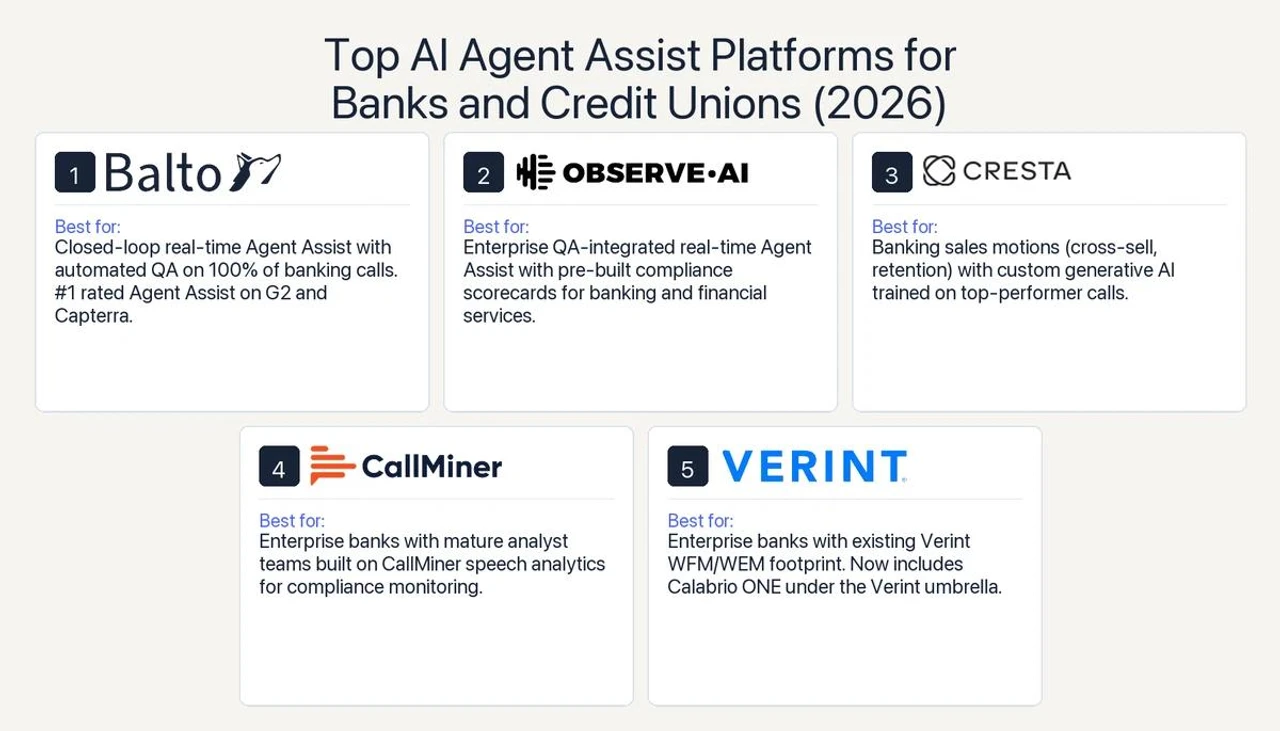
Credit: www.balto.ai
Deep Dive: Top 6 Ai Custom Agent Platforms For Enterprise
Let’s look closer at these platforms. For each, we’ll cover features, integration, scalability, pricing, and unique strengths.
Dialogflow Cx (google Cloud)
Dialogflow CX is Google’s enterprise-grade conversational AI platform. It builds on Dialogflow ES, adding features for complex workflows and multi-turn conversations.
- Scalability: Handles millions of interactions; used by global brands.
- Customization: Advanced flow editor, supports contextual conversations.
- Integration: Connects easily with Google Cloud, plus REST APIs for other systems.
- Security: Google’s security standards, GDPR-compliant.
- Analytics: Real-time dashboards, user journey tracking.
- Pricing: Pay-as-you-go, but can get expensive with high volume.
Example: Ticketmaster uses Dialogflow CX to manage event queries, scaling up during ticket releases.
Microsoft Azure Bot Service
Azure Bot Service is part of Microsoft’s cloud platform. It’s built for deep integration with Office 365, Teams, Dynamics, and more.
- Scalability: Runs on Azure cloud, auto-scaling for enterprise demands.
- Customization: Supports C# and Node.js; flexible coding options.
- Integration: Connects with Microsoft products and third-party APIs.
- Security: Meets HIPAA, GDPR, and other standards.
- Analytics: Azure Application Insights; custom metrics.
- Pricing: Subscription and pay-per-use models.
Example: Uber uses Azure Bot Service for scheduling and employee support.
Ibm Watson Assistant
IBM Watson Assistant is known for its NLP and enterprise integrations.
- Scalability: Handles large volumes; used in banking, insurance, telecom.
- Customization: Deep NLP, train agents with industry data.
- Integration: Connects with IBM Cloud, SAP, Salesforce.
- Security: Supports SOC 2, HIPAA, GDPR.
- Analytics: Detailed dashboards, conversation analysis.
- Pricing: Tiered, often pricier than others.
Example: Crédit Mutuel uses Watson Assistant for customer banking queries.
Amazon Lex
Amazon Lex powers Alexa and is part of AWS.
- Scalability: Built for millions of users; used by big enterprises.
- Customization: Supports voice and text; easy to train with utterances.
- Integration: AWS Lambda, S3, and other AWS services.
- Security: AWS standards, supports encryption.
- Analytics: Limited out-of-the-box; needs AWS CloudWatch.
- Pricing: Pay-per-request.
Example: Capital One uses Lex for banking queries via voice and chat.
Rasa
Rasa is open source and gives full control to enterprises.
- Scalability: Can be deployed on any cloud; needs technical setup.
- Customization: Total flexibility; write custom code and train with your data.
- Integration: REST APIs, webhooks, connects with any backend.
- Security: You control where data lives.
- Analytics: Custom dashboards; needs setup.
- Pricing: Free (open source); paid for Rasa Enterprise.
Example: BMW uses Rasa for multilingual customer support.
Servicenow Virtual Agent
ServiceNow focuses on IT and workflow automation.
- Scalability: Built for large IT departments.
- Customization: Deep workflow automation; script complex tasks.
- Integration: Connects with ServiceNow modules and third-party apps.
- Security: Enterprise-grade, used in regulated industries.
- Analytics: In-platform reporting.
- Pricing: Subscription-based.
Example: Siemens uses ServiceNow for IT support automation.
Key Comparison: Features & Pricing
To help you decide, here’s a quick feature and pricing comparison.
| Platform | Best For | Customization | Multi-language | Pricing | Support |
|---|---|---|---|---|---|
| Dialogflow CX | Retail, events | High | Yes | Usage-based | Google support |
| Azure Bot Service | Enterprise IT | High | Yes | Subscription | Microsoft |
| Watson Assistant | Finance, insurance | Deep NLP | Yes | Tiered | IBM |
| Amazon Lex | Voice, chat | Medium | Yes | Pay-per-use | AWS |
| Rasa | Technical teams | Total | Yes | Free/Paid | Community |
| ServiceNow VA | IT automation | Workflow | Limited | Subscription | ServiceNow |
This table shows that some platforms excel in voice, others in workflow automation. Rasa offers unlimited customization but needs a strong tech team.
Credit: assistents.ai
Case Studies: Real World Success
Vodafone: Dialogflow Cx
Vodafone needed to handle millions of customer queries in many languages. Dialogflow CX helped them automate answers and connect with their CRM. The result: faster response times and improved customer satisfaction.
Bradesco: Ibm Watson Assistant
Bradesco, a large bank, built custom agents to answer banking questions. Watson’s NLP helped understand complex requests. This reduced call center load by 30%.
Uber: Azure Bot Service
Uber uses Azure Bot Service for internal support. Employees can schedule rides, report problems, and get HR info. The bot connects with Outlook and Teams.
Bmw: Rasa
BMW wanted full control over data and conversation design. Rasa let them build agents for customer support and vehicle info. Their tech team handled the setup, leading to fast innovation.
Practical Tips For Deploying Ai Agents At Enterprise Scale
Building and launching custom AI agents can be tricky. Here are practical tips to avoid common pitfalls:
- Start Small: Begin with a single workflow or department. Test, learn, and expand.
- Involve Stakeholders: Get input from IT, HR, support, and business teams.
- Train Agents Regularly: Use real conversations to improve accuracy.
- Monitor Performance: Set KPIs—like response time, customer satisfaction, error rate.
- Plan for Integration: Map all systems the agent needs to connect with.
- Focus on Security: Encrypt data, set access controls, and audit regularly.
Non-obvious Insight
Many companies forget to train agents on “edge cases”—rare but important scenarios. Including these in your training data reduces mistakes and improves trust.
Common Challenges And How To Solve Them
Even the best platforms face challenges:
- Data Quality: Poor training data leads to bad answers. Use real conversations and clean data.
- User Adoption: Employees and customers may resist new agents. Provide clear instructions and feedback channels.
- Integration Issues: Connecting with legacy systems is hard. Use middleware or APIs where possible.
- Cost Overruns: Over-customizing can drive up costs. Set clear goals and limits.
Example Solution
A company struggled with integration between its AI agent and old CRM. They built a simple API layer to bridge the gap, saving months of work.
Future Trends In Enterprise Ai Agents
The market is moving fast. Here’s what to watch:
- Generative AI: New agents can generate answers, not just pick from a script.
- Voice and Multimodal: Agents will handle voice, image, and text together.
- Automated Training: Platforms are adding features to train agents faster using real-world data.
- Deeper Analytics: More detailed dashboards will help companies optimize agents.
- Human-AI Collaboration: Agents will hand off complex cases to humans more smoothly.
Data Point
According to Gartner, by 2026, 75% of enterprises will use AI agents for at least one key workflow.
Making The Final Choice: Step-by-step Guide
Choosing the best platform is a process. Here’s how to do it:
- Define Your Goals: What do you want the agent to do? (Support, sales, HR, IT)
- List Requirements: Integration, security, customization, languages.
- Shortlist Platforms: Pick 3–5 that fit your needs.
- Request Demos: See real examples and ask tough questions.
- Test with Real Data: Run pilot projects and measure performance.
- Check Vendor Support: Make sure you can get help when needed.
- Negotiate Pricing: Compare costs, including scaling and custom features.
- Review Security: Ensure compliance for your industry.
- Launch and Monitor: Deploy, track KPIs, and refine.
Vendor Comparison: Integration & Support
Integration and support can make or break your deployment. Here’s a quick comparison.
| Platform | Integration Ease | API Quality | Technical Support | Community |
|---|---|---|---|---|
| Dialogflow CX | High (Google Cloud) | Strong REST APIs | 24/7 enterprise | Active |
| Azure Bot Service | High (Microsoft stack) | Robust APIs | Enterprise support | Growing |
| Watson Assistant | Medium (IBM Cloud) | Good APIs | Premium support | Moderate |
| Amazon Lex | High (AWS) | Comprehensive APIs | Business support | Active |
| Rasa | Flexible (any system) | Open, customizable | Community/enterprise | Strong |
| ServiceNow VA | Deep (IT systems) | Good APIs | Enterprise support | Small |
Rasa stands out for flexibility. Dialogflow and Azure are best if you already use their cloud ecosystems.
Security And Compliance: What Enterprises Must Know
Security is not just about encryption. Enterprises must follow strict rules:
- Data Residency: Where is your data stored?
- Access Controls: Who can access the agent and its logs?
- Audit Trails: Can you track changes and access history?
- Regulatory Compliance: Does the platform meet GDPR, HIPAA, PCI DSS?
Tip: Always ask for compliance certificates before signing contracts. Data breaches can lead to huge fines and loss of trust.
External Resource For Further Reading
For a deep dive into AI agent standards and best practices, see the Wikipedia article on Artificial Intelligence.

Credit: cloud.google.com
Frequently Asked Questions
What Is The Difference Between A Chatbot And A Custom Ai Agent?
A chatbot usually answers simple questions or follows scripts. A custom AI agent uses advanced AI to understand context, handle complex tasks, and integrate with business systems. Custom agents are built for enterprise needs.
How Much Does An Enterprise Ai Agent Platform Cost?
Costs vary. Some platforms charge per conversation (Amazon Lex, Dialogflow CX), others offer subscriptions (Azure Bot Service, ServiceNow). Customization, integrations, and support can increase total costs. Always get a clear price breakdown.
Can Ai Agents Handle Sensitive Data Securely?
Yes, if the platform meets enterprise security standards. Look for features like encryption, access controls, and compliance with GDPR or HIPAA. Open source platforms like Rasa let you control data location.
What Are The Biggest Mistakes When Deploying Ai Agents?
Common mistakes include:
- Choosing a platform without considering integration needs.
- Ignoring security and compliance requirements.
- Not training agents with real conversation data.
- Over-customizing, leading to high costs.
How Do I Measure The Success Of My Ai Agent?
Track metrics like:
- Response time
- Resolution rate
- User satisfaction
- Error rate
- Cost savings
Set clear KPIs and monitor them regularly.
Final Thoughts
AI custom agent platforms offer huge benefits for enterprises—if you choose wisely. The best platform is not always the most famous; it’s the one that fits your workflows, data, and integration needs. Start with clear goals, involve stakeholders, and demand strong security.
Test before you scale, and focus on continuous improvement. As AI evolves, your custom agents will become a key part of your business success.


About author








Add comment